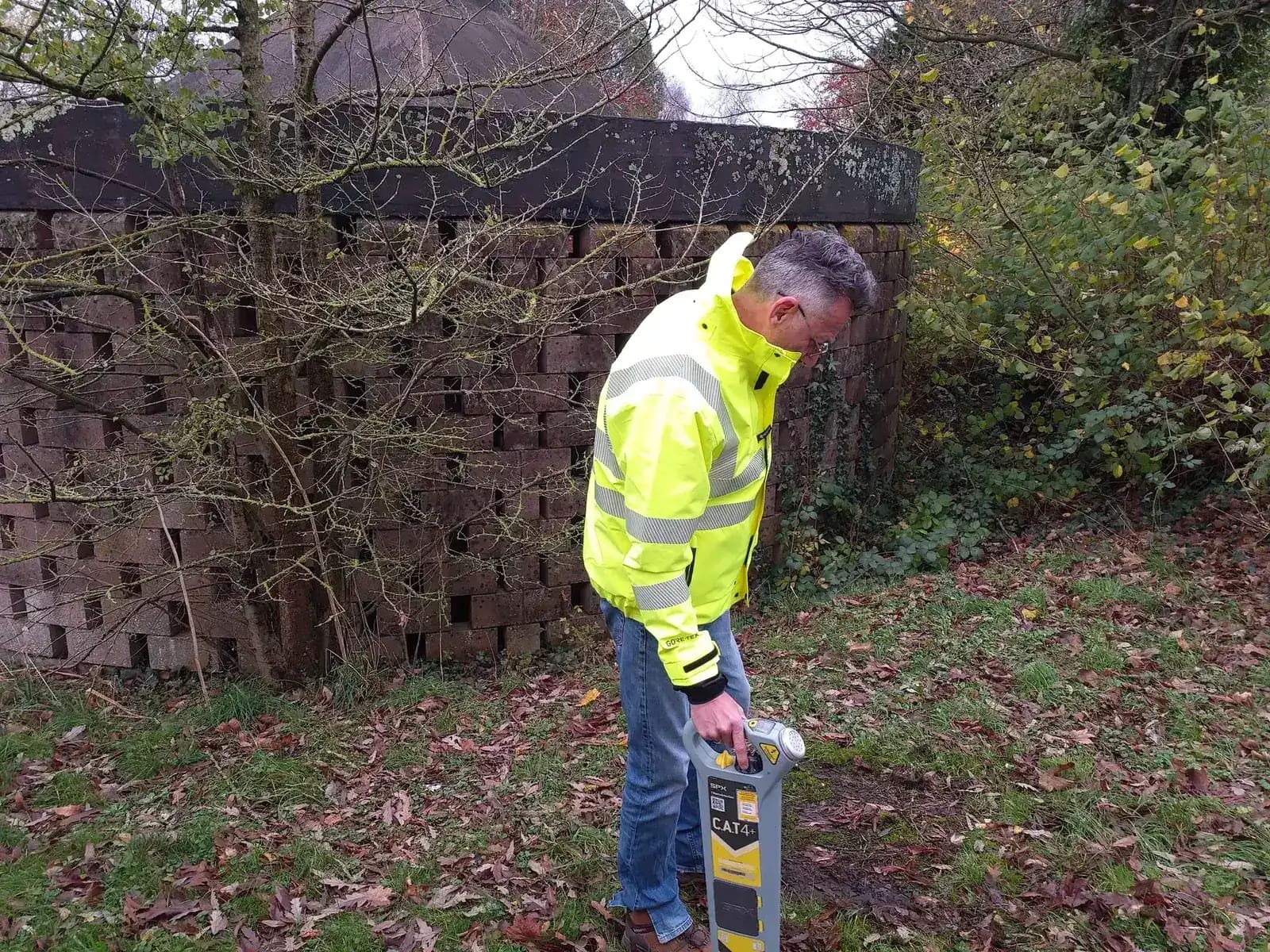
Utility Avoidance
CAT and Genny Training | CAT and Genny Course UK | EUSR CAT 1
Not just Genny & CAT equipment operation. The scientific understanding and field-verified habits that eliminate service strikes.
From £95 per person
Book CAT and Genny Training →CAT and Genny training is a practical safety course that teaches operatives how to use a cable locator (CAT) and signal generator (Genny) to find buried cables and pipes before excavation. Sometimes called "cat scanner training", it covers electromagnetic theory, four detection modes, signal interpretation, and hands-on cable locating and service detection on a real site. The course teaches operatives how to locate underground utilities safely using both active signals from the transmitter and passive signals from the ground itself.
This course fulfils the HSG47 training requirement for anyone using cable locating equipment near underground services. Successful delegates can be assessed for an EUSR CAT1 card, ProQual CAT1 certificate, or Sygma in-house certification.
21 Years
One Specialism
Underground utility location training is all we do.
70-80%
Increase in Genny Usage
Measured through locator data downloads after Sygma training.
Proven
Strike Reduction Record
Clients report measurable reductions in service strikes.
Who Is This Course For
Designed For
Complete Beginners
No prior experience of Genny or CAT equipment. Zero to competent in 1-2 days.
Site Operatives and Groundworkers
Anyone who locates buried services before excavation. Required if your team breaks ground near underground services.
Civil Engineers and Supervisors
Understand the equipment your teams are using, supervise safely, and audit survey work on site.
Organisations Introducing Genny-First
Companies transitioning to Genny-First as the workforce-wide method.
Why This Course Exists
The Problem with Standard CAT and Genny Training
Most standard CAT and Genny training teaches operatives to press the on button and walk. They know what the beep means. They do not know why the signal behaves differently in wet or disturbed ground, what happens to accuracy near a joint, or why their passive Power-mode reading is not telling them what they think it is. The result is training courses that hand out certificates without changing how operatives approach CAT and Genny work on site.
The Sygma CAT and Genny training course was built to fix that. You will notice that Sygma says "Genny & CAT" rather than the industry standard "CAT and Genny". That is deliberate. The rest of the industry puts the locator first. We put the signal generator first, because that is the methodology change that reduces service strikes. Start with the Genny, exhaust every connection opportunity, verify what is in the ground before you rely on passive modes. That single change in workflow order is the difference between an operative who finds what is there and one who only confirms what they expected.
Course at a Glance
Why We Say It Differently
Genny & CAT, Not CAT & Genny
The industry calls it "CAT and Genny training" or "cable avoidance training". We call it Genny & CAT. The name reflects the methodology: start with the signal generator, apply a known signal, trace the signal across the site, verify it before relying on passive readings. Active signals from the Genny are reliable; passive signals from the ground are easily misread. Every course Sygma delivers follows this order because 21 years of post-strike investigation data tells us the same thing: the majority of preventable utility strikes happen when operatives skip the Genny and rely on passive signals alone.
Format Question
Online vs On-Site CAT and Genny Training
Searches for "CAT and Genny training online" and "cat and genny course online" are common. Sygma's full CAT and Genny course is on-site by design. The reason is the practical assessment: a CAT and Genny course that does not include hands-on operation of a CAT and Genny on a real site cannot prove competence under HSG47, and cannot be assessed against the EUSR CAT1 or ProQual CAT1 practical criteria. Online theory alone will not give an operative the qualification.
Where online training does work is the awareness layer: refreshers, supervisors who need to understand the equipment without operating it, and the HSG47 theory module that complements an on-site practical day. For that, Sygma offers a CAT4 HSG47 Awareness Online course covering theory, data download and HSG47 compliance. It is designed to pair with this on-site CAT and Genny training rather than replace it.
Course Content
CAT and Genny Course Content: Cable Avoidance Training on Your Ground
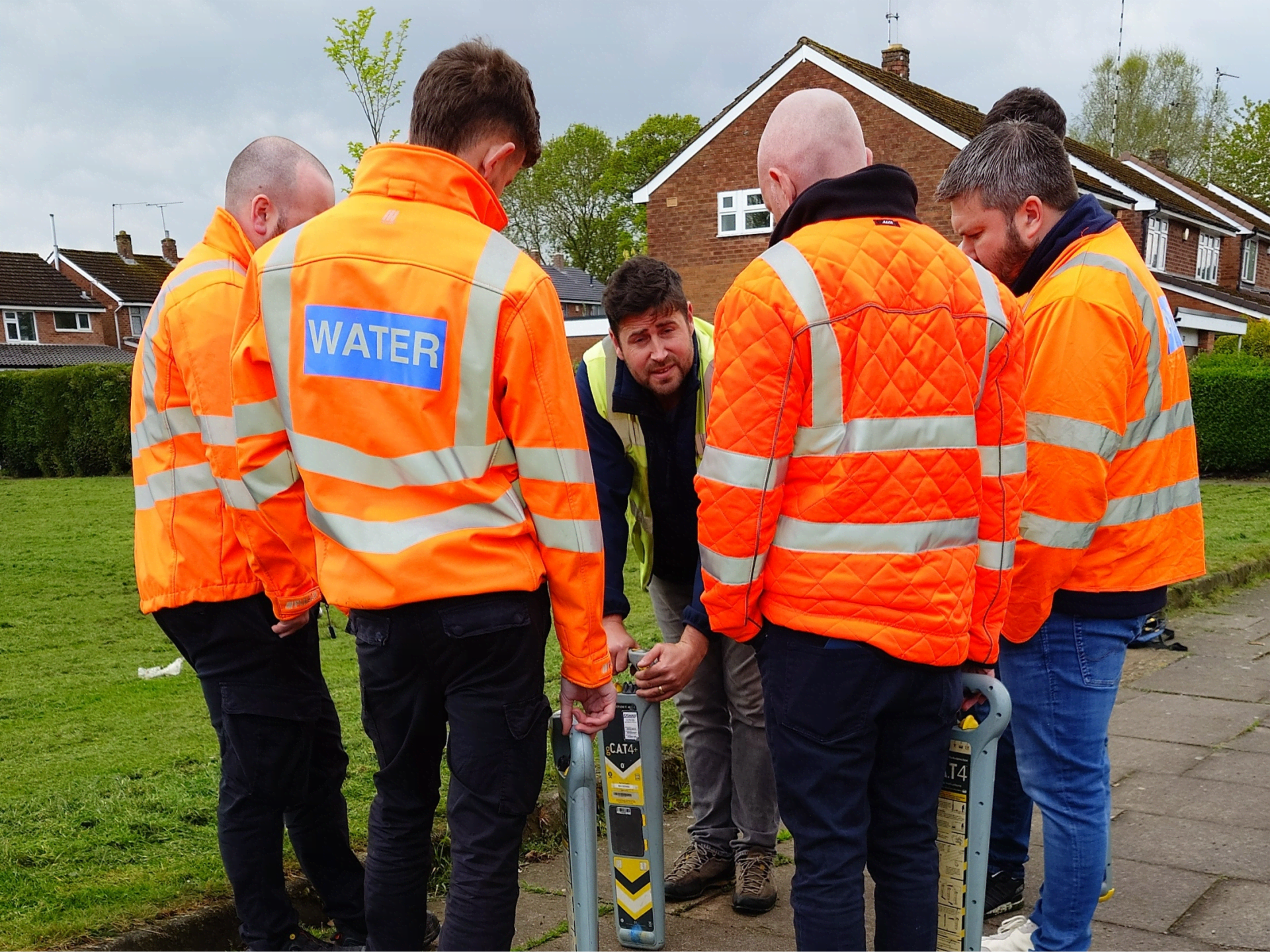
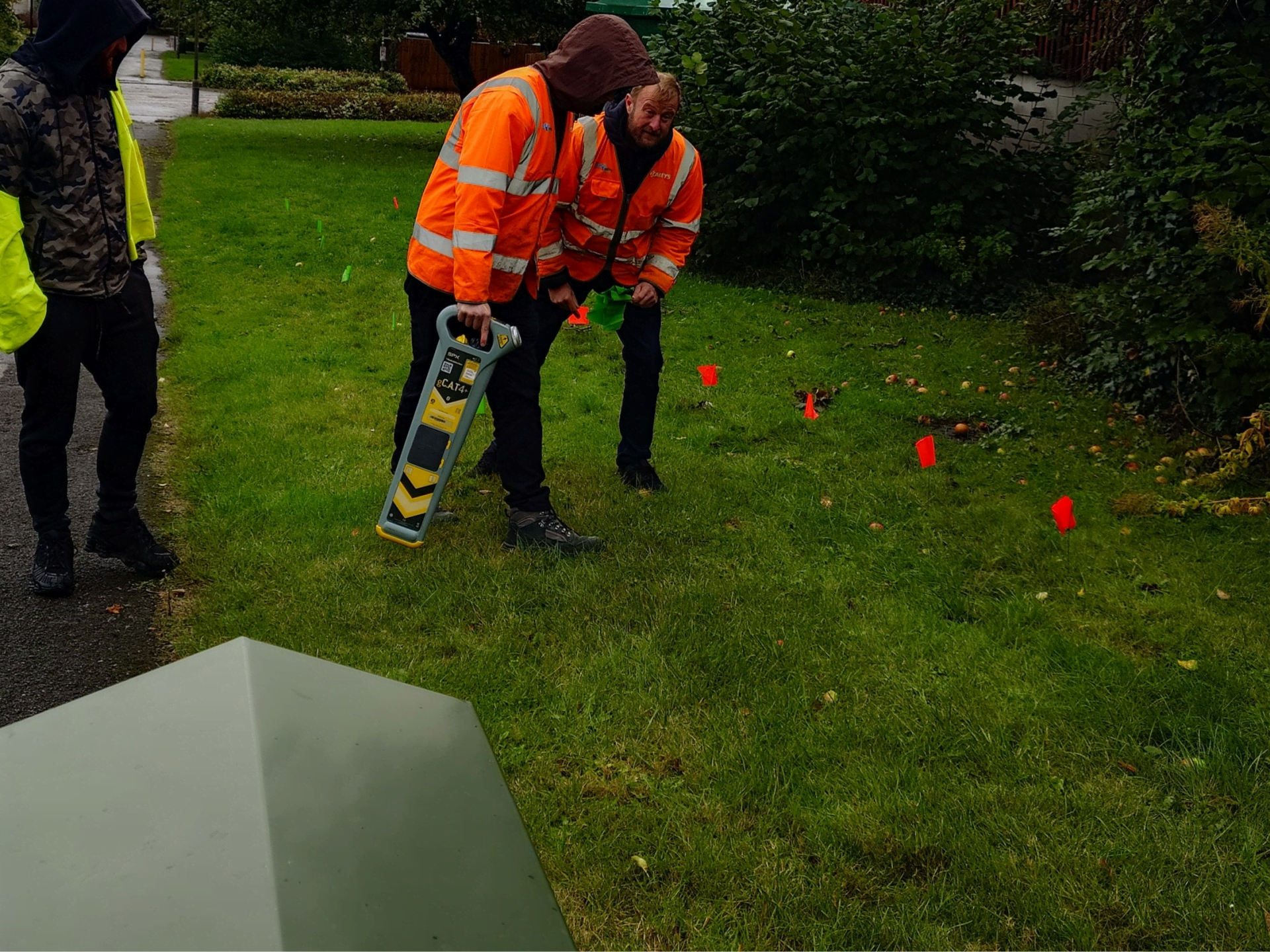
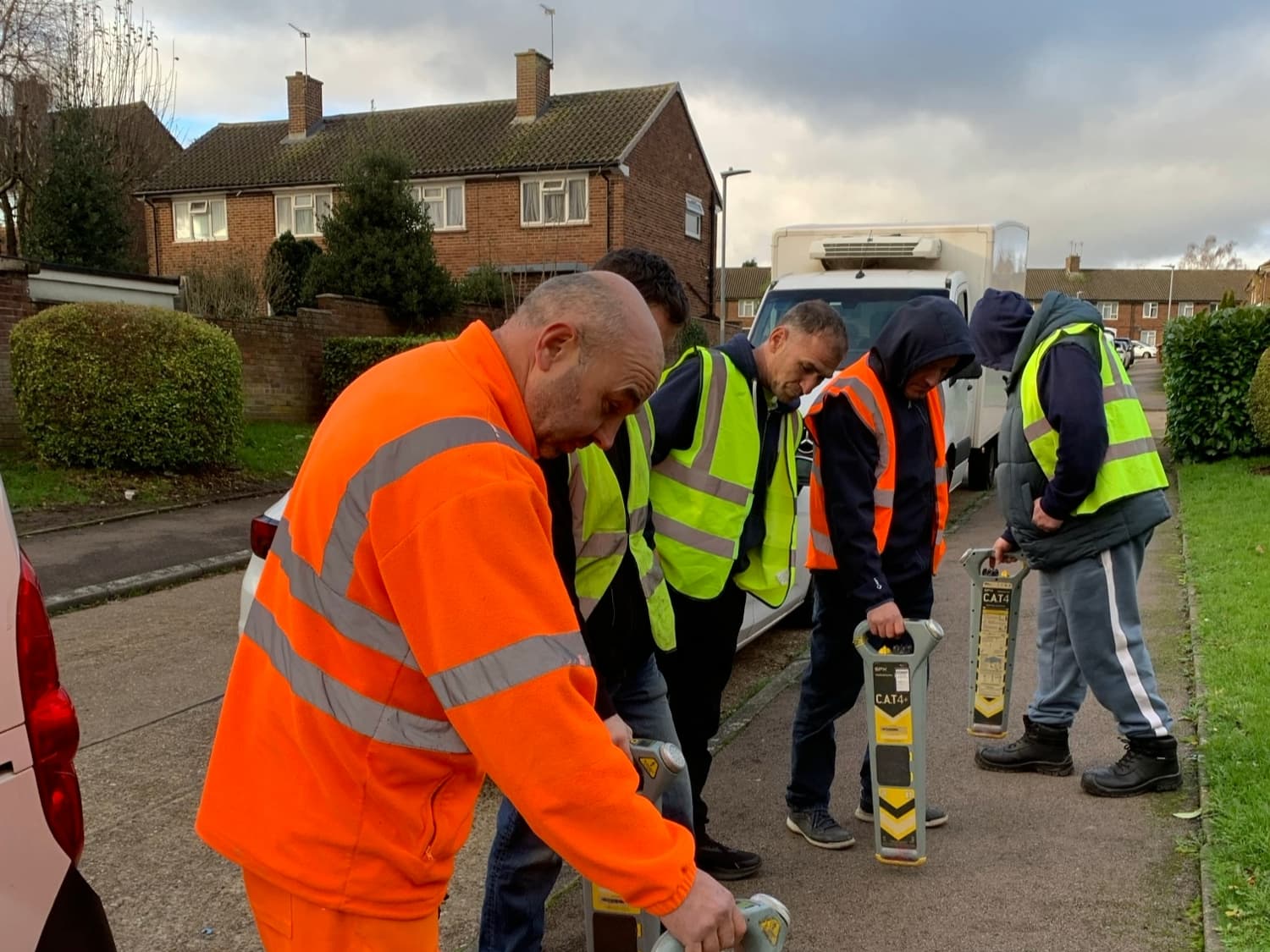
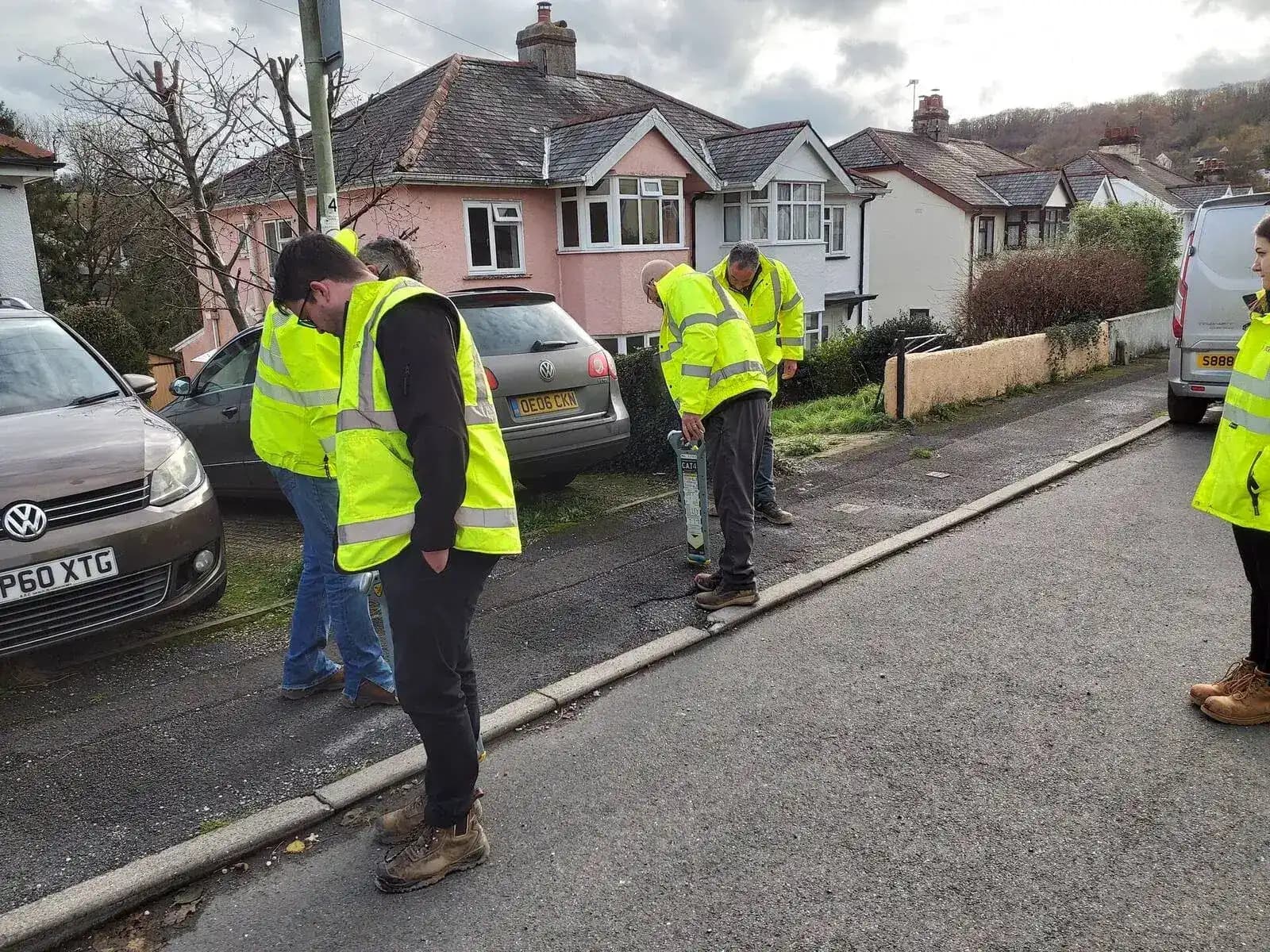
The classroom covers electromagnetic theory and the four detection modes. The practical session moves to site with the Genny tools — signal generator, induction clamp, sonde, earthing accessories — to apply active signals and trace underground utilities in real conditions. Cable plans and service drawings are cross-checked against locator readings throughout.
Classroom: Theory
The full technical and regulatory context
- ›Genny & CAT equipment: HSG47 and the consequences of service strikes
- ›Legislation and HSE guidance: HSG47, national legislation, client and designer responsibilities
- ›Utility networks and underground services: cable and pipe types, materials, connectivity
- ›Buried service plans (STATS): interpreting plans and their limitations
- ›Calibration: storage, functional checks, pre-use inspection
- ›Electromagnetic theory: how a cable locator works, limitations, myth-busting
- ›Locator and signal generator operation in all four modes (Power, Radio, Genny, Avoidance)
- ›Signal interpretation: joints, changes of direction, depth, ambiguous readings
- ›Signal distortion: effects on location accuracy
- ›Transmitter applications: dual frequency, capacitance, earth positioning, blind induction, nulling out
- ›Depth estimation: when and how to take readings
- ›Data logging (optional): CAT Manager software
- ›PAS128 survey levels
- ›Permits and paperwork: permits to dig, safe systems of work
Site-Based: Practical
Every principle proved on real underground services
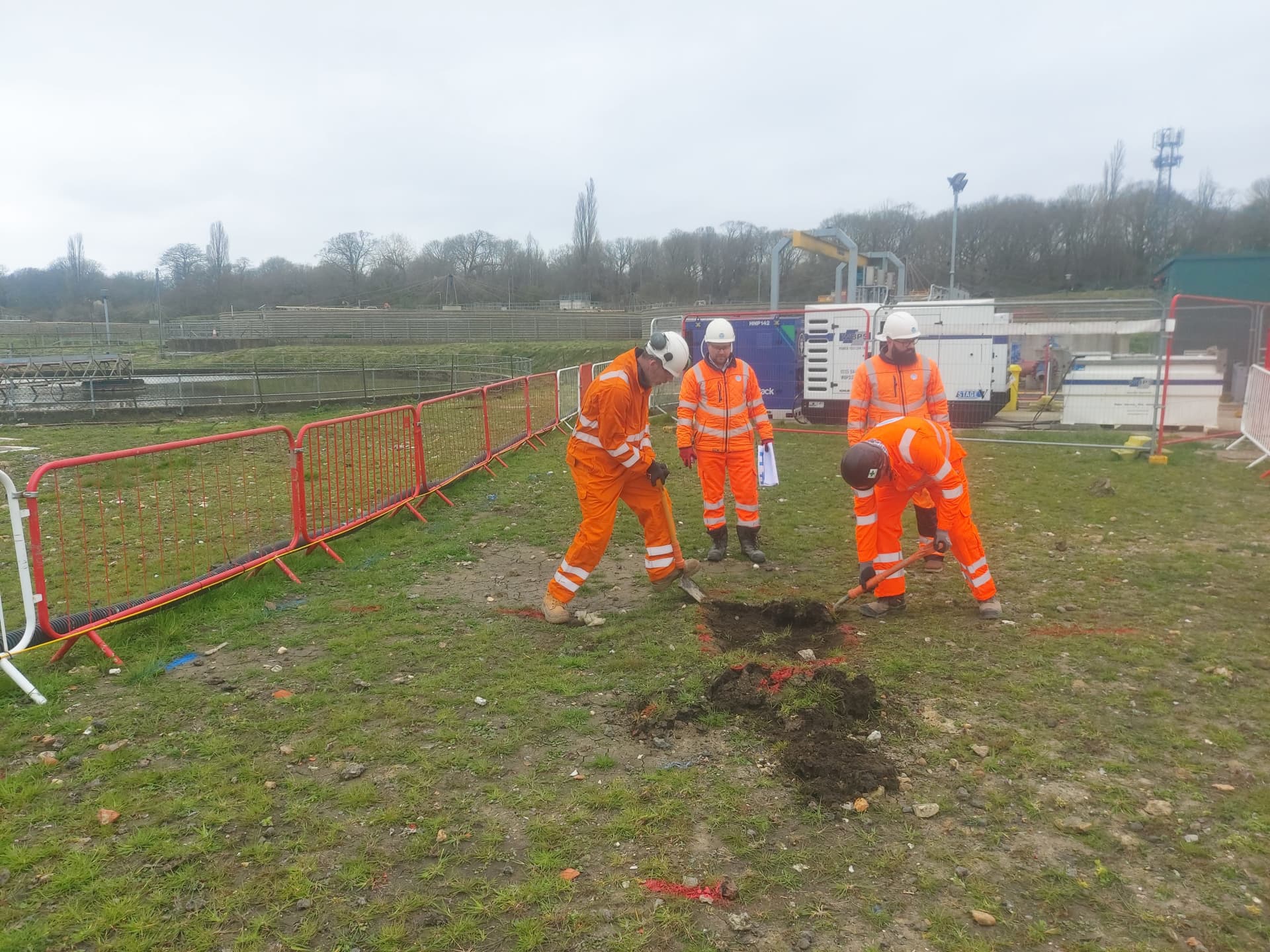
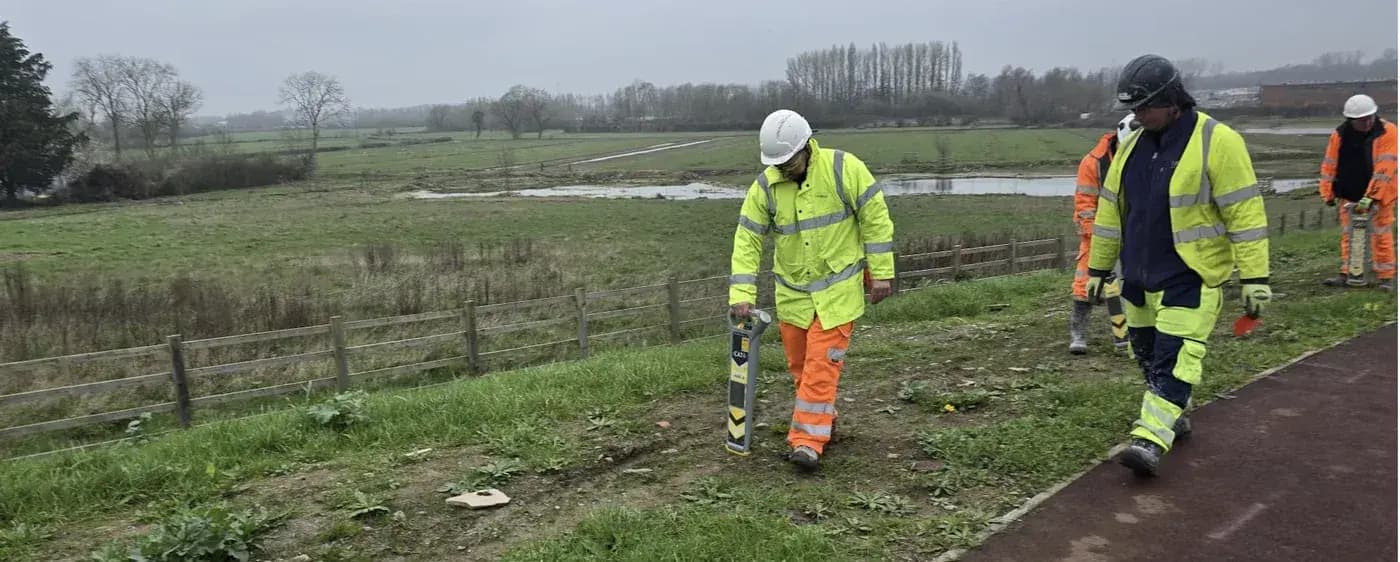
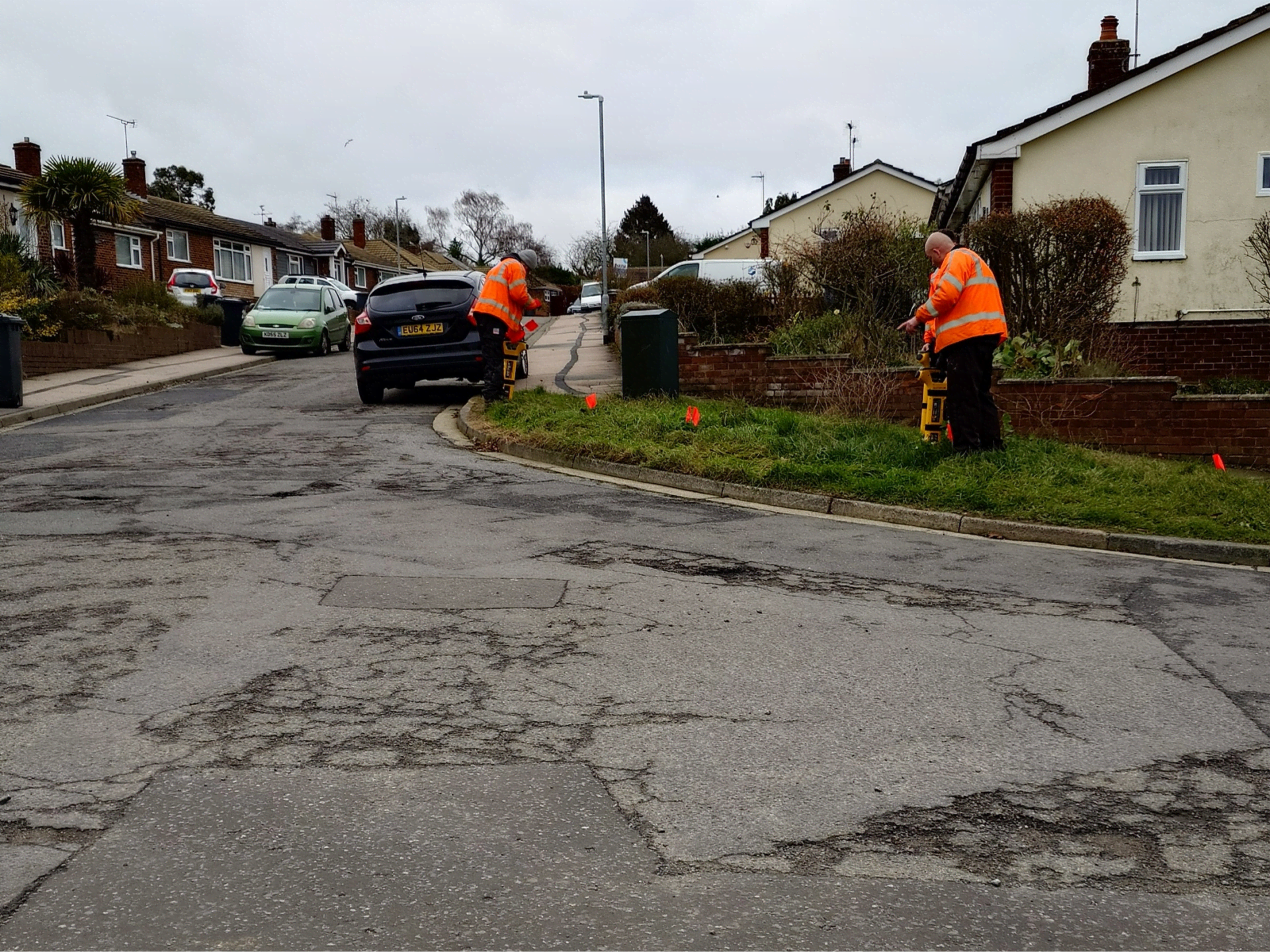
The practical session takes course attendees outside onto a real site to prove every safety procedure and practical skill taught in the classroom. Sygma uses your own site wherever possible, which means operatives are locating underground services on the same ground and the same utility types they will encounter daily.
- ›Reading service plans to plan the CAT and Genny survey
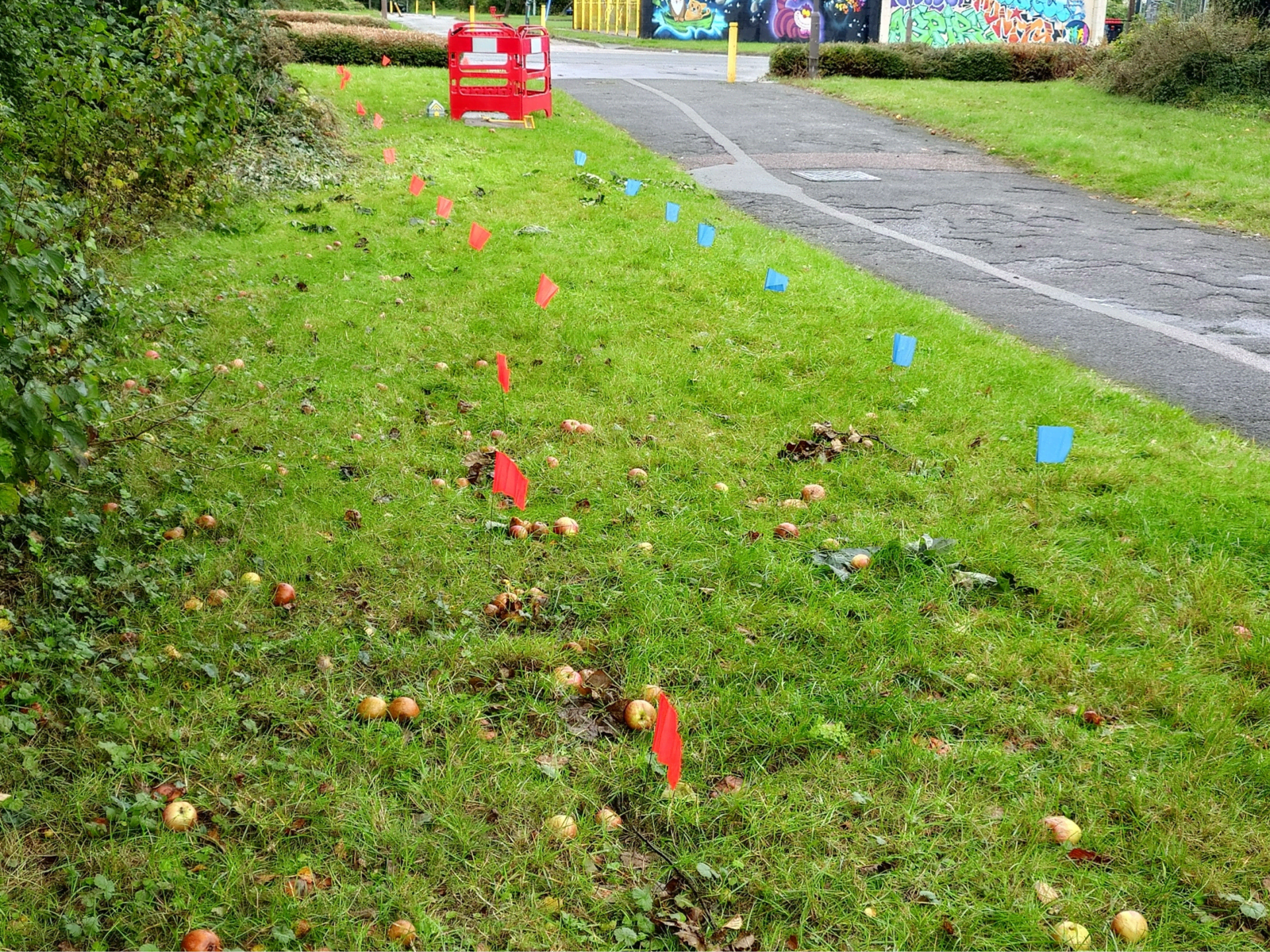
- ›Site visual checks: above-ground indicators of buried services
- ›Applying a signal via direct connection, capacitance, and induction
- ›All four locating modes with Genny-First emphasis throughout
- ›Locating problem services: street lighting, LV, small comms
- ›Joints, T-connections, and direction changes using Genny-First
- ›Effect of Genny earth positioning on the locate
- ›Blind induction sweeps and nulling out nearby services
- ›Full utility survey methodology: plans through systematic site work
- ›Individual practical assessment against a documented standard
What You Get
CAT and Genny Certificate and Qualification Routes
Certification depends on the route chosen. The difference across our training courses is the awarding body and the type of ID card or certificate issued -- the Sygma course content is the same across all formats.
EUSR CAT1 Accredited
The industry-standard EUSR CAT1 qualification. On successful completion, your cat and genny certificate is registered on the EUSR database and you receive an EUSR ID card valid for 3 years. Widely recognised across UK construction sites and required by most principal contractors and utility companies.
ProQual CAT1 Accredited
An externally accredited cat and genny qualification through ProQual, with all four EML modes assessed in the practical element. You receive a ProQual CAT1 certificate valid for 3 years. The ProQual CAT1 Plus two-day route includes the Genny-First methodology in its formal assessment criteria.
CITB Approved Training
Sygma Solutions is a CITB Approved Training Organisation (ATO). Every cat and genny training course is delivered to CITB ATO standards for content, assessment and record-keeping. Employers who pay the CITB levy may be eligible for training funding support through the CITB Employer Network, with Sygma providing the documentation required to support funding applications.
Sygma In-House Certified
Sygma's own cat and genny certificate of completion, covering the same comprehensive content as accredited routes but without awarding body fees. Includes written and practical assessment results, a detailed skills record, and personalised pathway guidance on which qualification to progress to next.
Formats Available
Course Formats
| Format | Duration | Max Delegates | Assessment |
|---|---|---|---|
| One-day in-house (certified) | 1 day | 8 | Written + practical |
| One-day EUSR CAT1 (accredited) | 1 day | 8 | Written + practical |
| One-day ProQual CAT1 (accredited) | 1 day | 8 | Written + practical |
| Two-day in-house (certified) | 2 days | 8 | Written + practical |
| Two-day ProQual CAT1 Plus (accredited) | 2 days | 8 | Written + practical |
| Two-day split - 3 months apart (certified) | Day 1 + Day 2 | 8 | Day 1 training, Day 2 assessment |
The two-day split format lets operatives apply classroom learning in real conditions before returning for their assessed practical day, with a ~3 month gap so behaviours bed in. All training courses delivered by a CITB Approved Training Organisation.
Site Requirements
What You Need to Provide
Sygma's dedicated training centre at Wigan is available as an alternative venue at no extra cost, with full welfare and catering facilities.
UK Delivery
CAT and Genny Training Near You, Across the UK
Looking for CAT and Genny training near me? Sygma delivers CAT and Genny training courses at client sites anywhere in the UK. Common delivery regions include London and the South East, Manchester and the North West, Birmingham and the Midlands, Bristol and the South West, Scotland, and across Northern England. Travel is included in the day rate with no hidden extras.
Our training centre in Wigan is available as an alternative venue at no cost, with full welfare facilities for delegates travelling in.
CITB Funding
CITB Approved Training Organisation
Sygma Solutions is a CITB Approved Training Organisation. Employers who pay the CITB levy may still be able to access training funding support through the CITB Employer Network.
Contact your CITB adviser for current eligibility and funding options. Sygma is a CITB Approved Training Organisation and provides all required documentation to support funding applications.
Related Reading
Genny-First Methodology
Why Sygma teaches Genny-first and how it increases buried utility detection rates.
HSG47 Explained
The HSE guidance that underpins all cable avoidance work. What it says and why it matters.
Strike Prevention for Site Managers
Practical guidance for site managers on reducing utility strike risk on construction projects.
EUSR Card Renewal
When and how to renew your EUSR CAT1 card before it expires.
Common Questions
Frequently Asked Questions About CAT and Genny Training
What is CAT and Genny training?
CAT and Genny training teaches operatives to use a cable locator (CAT) and signal generator (Genny) to find underground services before excavation. Sygma teaches a Genny-First methodology and offers EUSR CAT1, ProQual CAT1, and Sygma in-house certification routes.
How long does a CAT and Genny course take?
One or two days. One-day format covers theory plus assessment for delegates with some experience. Two-day formats split classroom and site work, or add the ProQual CAT1 Plus Genny-First assessment on day two.
Can CAT and Genny training be done online?
Classroom theory can be delivered online for awareness and refreshers -- Sygma offers a CAT4 HSG47 awareness online course for that. The full assessed qualification (EUSR CAT1 or ProQual CAT1) requires a real site practical and cannot be completed entirely online.
How much does a CAT and Genny course cost?
In-house day rate for up to 8 delegates at your site, or per person on open courses. Travel included, no hidden extras. CITB-levy employers may access funding via the CITB Employer Network. Contact us for a tailored quote.
Do you need to be trained to use a CAT scanner?
Yes. HSG47 requires anyone using cable and pipe locating equipment to be trained and competent. Most principal contractors and utility companies require a recognised qualification before allowing operatives to use locating equipment on site.
How long is the CAT and Genny qualification valid for?
EUSR CAT1 and ProQual CAT1 certificates are valid for 3 years. Sygma in-house certificates have no fixed expiry, but most employers require refresher training every 3 years.
Is EUSR CAT1 the same as EUS CAT1, or the same as CAT and Genny training?
EUSR CAT1 and EUS CAT1 are the same qualification. CAT and Genny training is the broader practical course; EUSR CAT1 is the specific accredited qualification many employers ask for. Sygma delivers both, plus ProQual CAT1 and ProQual CAT1 Plus.
What equipment do delegates need to bring?
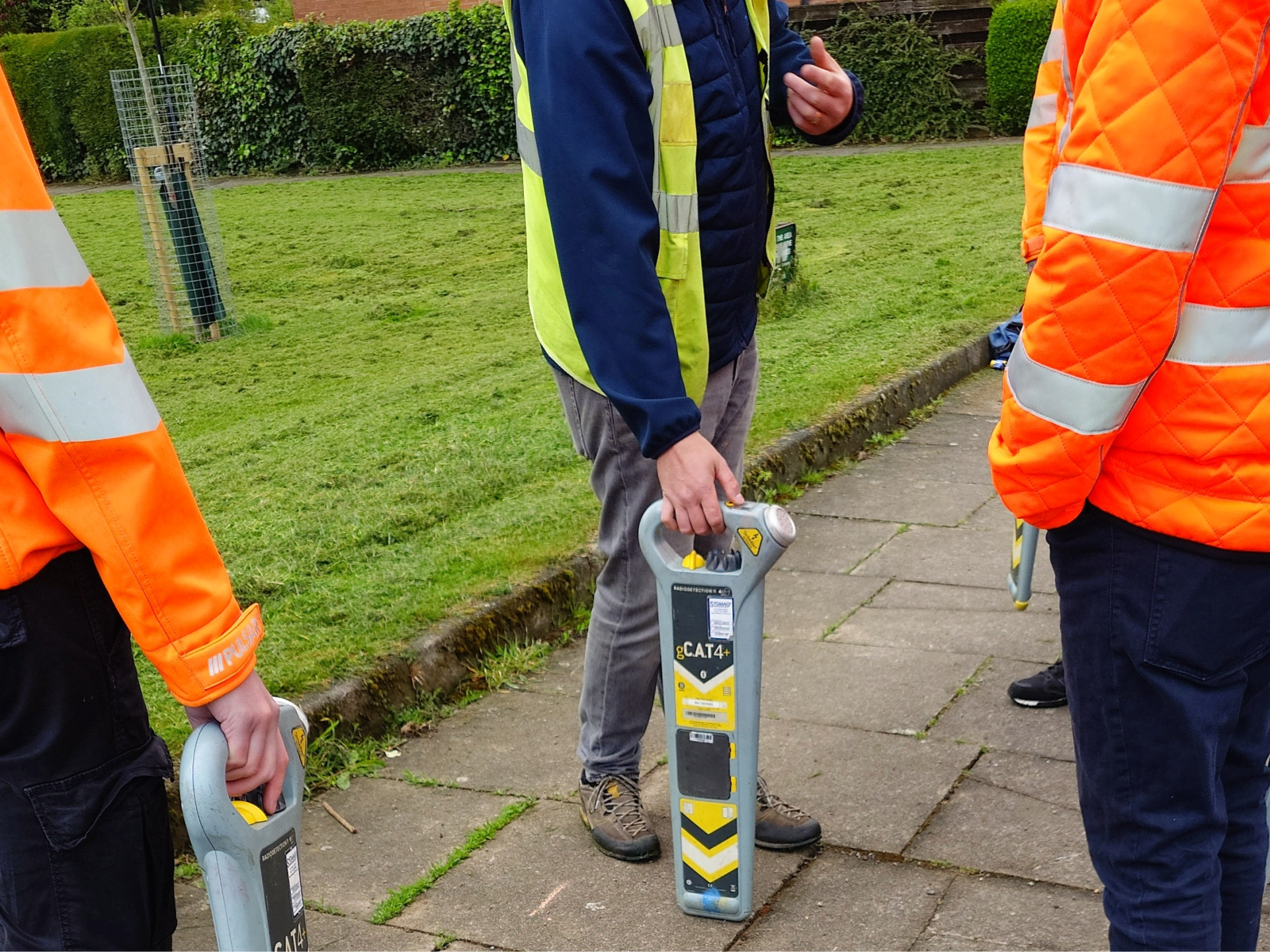
Each operative should bring the locator and signal generator they use on site. Sygma provides Radiodetection CAT4 and Genny4 as backup. Any manufacturer (Vivax-Metrotech vLoc, Leica DSX, Radiodetection RD8200/RD8100) is suitable. Minimum 1 locator per 3 delegates if sharing.
Can the course be tailored to our sites and risk profile?
Yes. Include your permit-to-dig procedures, strike history, site-specific hazards, and documentation. The QTS surface-laid cables programme is one example of how we customise the course.
Is the course suitable for delegates with no previous locating experience?
Yes. Accessible to delegates at any level. Complete beginners should take the two-day format for sufficient practical time on site.
Can we combine this course with EUSR CAT2 Safe Dig?
Yes. Sygma offers combined formats with EUSR CAT1, CAT2 Safe Dig, and CAT and Genny content in a single programme. Contact us for combined booking options.
What qualifications do Sygma trainers hold?
Sygma trainers are utility location professionals with real-world field experience -- not generalist H&S trainers. Many hold CICES membership, PAS128 field experience, and backgrounds in large-scale infrastructure. You learn from people who have done the job.
Regulation
HSG47 Compliance
HSG47 is the Health and Safety Executive's guidance on avoiding danger from underground services. It places a clear duty on employers and site supervisors to identify hazards, plan work safely, and ensure operatives can locate underground services before excavation.
HSG47 specifically requires underground service detection before any excavation begins. Operatives must identify hazards from buried cables, gas mains, fibre optic lines and plastic pipes — services that passive detection alone often misses. Striking an electricity cable can cause fatal arc-flash injury; hitting a gas main risks the entire site. Comprehensive training in active signal generation and verified service detection is the legal duty HSG47 places on employers.
This course addresses every key element of HSG47 guidance on preventing strikes on underground services. Each part of this safety training maps back to a specific HSG47 requirement, with practical skills assessed on real buried gas, water, electricity, telecoms and district heating utilities during the site-based session.
Competence
Trained and Competent Operatives
Formal safety assessment ensures operatives meet competence standards for cable avoidance work.
Process
Safe System of Work
Classroom and practical safety training covers systematic approach to underground service location.
Planning
Service Plan Checks
Reading, interpreting and cross-checking buried service drawings before work begins.
Equipment
Correct Use of Equipment
Training in all four locating modes (Power, Radio, Genny and Avoidance) with emphasis on correct operation and limitations.
Why Choose Sygma
Why Sygma for Genny & CAT Training
We go beyond qualification specifications. Our training courses are built on years of strike investigations, real-world field experience with civil engineers and utility contractors, and proven safety results for course attendees across UK infrastructure projects.
Content
Content That Exceeds Industry Standards
Whether you choose in-house, EUSR or ProQual, Sygma content goes above and beyond qualification specifications. This comprehensive approach is something you will only find in a Sygma course.
Methodology
Genny-First Methodology
70-80% increase in Genny usage among Sygma-trained operatives. Measured through locator data downloads.
People
Specialist Trainers
Directly employed. Ex-utility surveyors or ex-equipment manufacturer specialists. TAQA qualified.
Assessment
Real Practical Assessment
Structured on-site practical in real conditions. The goal is competent operatives, not just certificates.
Delivery
We Come to You
Delivered at your site. Travel included. No hidden extras. Independent — no surveys, no equipment sales, no manufacturer relationships.
Further Training
Related Courses
Sygma offers a range of cable avoidance training courses and utility location training programmes to suit different needs and regulatory requirements, from one-day courses for site operatives to multi-day qualifications for civil engineers and supervisors.
Qualification
EUSR CAT1
EUSR-registered qualification for operatives who need a formal card.
View Course →Assessment
ProQual CAT1
Accredited qualification with all four EML modes in the practical assessment.
View Course →Vivax-Metrotech
vScan & Tx Training
The Vivax-Metrotech vScan and transmitter equivalent of this course, using the same Sygma methodology.
View Course →See It In Action
The Genny First Approach on Site
Watch Pete Ashcroft walk through the Genny First methodology in practice, why the signal generator goes on before passive modes, how to apply it in different site conditions, and what the data shows about miss rates when it is left until last. This is the approach at the core of every Sygma CAT and Genny training course.
Read the full breakdown of the Genny First approach →Book Your CAT and Genny Training
Site-based training courses delivered nationwide, bespoke to your equipment, your plans and your risk profile. Practical skills built on real underground services. Contact us for a tailored quote.